


Cannabidiol, or short for CBD, is one of the 113 known compounds called cannabinoids found in the Cannabis sativa L. plant, also known as simply hemp.
CBD is known to support the mind and body in many wonderful ways. Among the many benefits that users notice and see results from, some of the main benefits of CBD are a sense of calm & relaxation, supports healthy sleep cycles, helps in recovery from exercise-induced inflammation, and more.
So what does CBD feel like when you take it? Does CBD oil relax you? Does CBD make you feel good? Does CBD oil give you a buzz? We’ll get into that, but first, it’s important to note something.
It mostly depends on what your body needs.
CBD acts as an adaptogenic, also referred to as “adaptogens,” which is “defined as agents that support the body’s ability to accommodate varying physical and emotional stresses” to influence more of what your body needs while promoting overall health and wellness.
The Human Endocannabinoid System
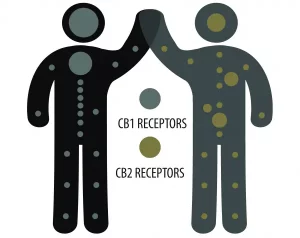 Before getting into how does CBD feel, it’s important we cover what the Endocannabinoid System is.
CBD works by activating the Endocannabinoid System, or ECS, indirectly by a channel of receptors within our central and peripheral nervous system located in our brain, spinal cord, organs, and immune system.
Cannabinoids behave differently, so one might trigger only one receptor, while others bind with both. In some cases, like CBD, the cannabinoids don’t bind to CB1 or CB2, instead, altering those receptors through other pathways.
Cannabinoids act as a primer for nerve endings, allowing your brain to communicate more effectively with your body. The goal of this to get your body back to normal healthy levels or equilibrium called “homeostasis.”
This explains why taking CBD doesn’t necessarily bring immediate results, but consumers see the real benefits of CBD over time of consistent use.
What Does CBD Feel Like? Can You Feel CBD?
Unlike many natural remedies, CBD does have an effect that on yourself that you will feel. When you take CBD, it takes about 15-45 minutes to feel an effect. Keep in mind that CBD is not like THC, where you feel “high,” but you feel a subtle effect of calm and relaxation.
When you talk about CBD’s ability to help mitigate symptoms of anxiety, pain, inflammation, and other health cases, it can take a couple of days, 3 to 7 days, to 2-4 weeks of consistent dosing to notice results.
That depends more on how bad your case is, your body’s response and tolerance to CBD, the quality of the CBD product, and your individual biology.
So how does CBD make you feel? It depends on a few things.
What’s impressive – and perplexing – is CBD’s versatility. To better understand this, let’s have to look at CBD’s potential adaptogenic properties.
Adaptogens are plants or extracts that help the body adapt to stresses and biological changes, including immune system activity. Theoretically, both Cannabis sativa L. and full-spectrum whole-plant extract could fit the adaptogen definition. However, CBD itself is a molecule – not a plant or extract.
But labels aside, CBD products display the same behaviors you’ll see from verified adaptogens.
Thanks to its adaptogenic performance, CBD extracts’ effects differ – even contradict – depending on your body’s needs. For instance, your brain will be more active during the day, so you may notice a clearer head and more energy.
The opposite will be true at night, with many people using CBD as a sleep aid or for general relaxation during inactive periods.
Another example is CBD’s seemingly opposing impact on eating habits. One 2018 CBD study noted both increased and decreased appetite as a side effect, depending on which participant they examined.
Overall, CBD can be either relaxing or stimulating, depending on what your brain and body need. Regardless, you won’t notice any physical or mental impairment like THC produces.
How Does CBD Make You Feel If You Take High Doses?
If you think higher doses mean better effects, you’re not alone. After all, it makes perfect sense. But we should know by now that CBD seems to defy conventional expectations.
CBD behaves in a “bell curve” or “u-shaped” fashion when it comes to dosing. Its effects are biphasic, meaning there’s a negative correlation between dose and potency – as dose increases, effectiveness eventually decreases.
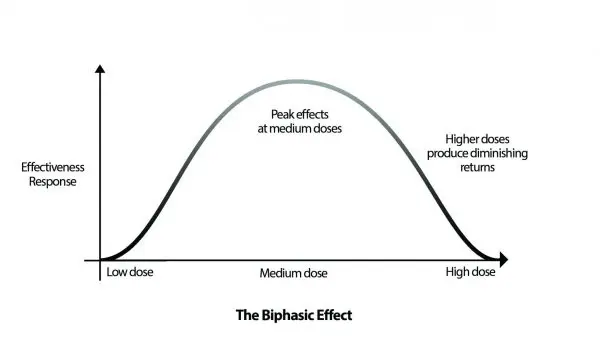
In other words, too much CBD is just as ineffective as too little. Dosage requirements can range from tens to hundreds of milligrams per day. But if you exceed the “sweet spot” dose, the effects will weaken and eventually stop.
Another problem is that taking higher doses can cause tolerance, forcing you to take a three to seven-day CBD break and get back on a lower dose to allow your tolerance to CBD to reset.
However, CBD is known to have side effects, which will intensify as you increase the dose. We’ll get to that in a minute.
Does CBD Oil Give You A Buzz or High?
No, CBD oil won’t give you a buzz or high feeling. THC and – to a much lesser extent – cannabinol (CBN) are the only two major cannabinoids known to impair mental and motor function.
As we mentioned, CBD doesn’t bind to the CB1 or CB2 receptors, meaning it can’t directly affect the way THC and many other cannabinoids do. Instead, cannabidiol works through different pathways, altering the shape and behavior of endocannabinoid receptors.
Once altered, the CB1 and CB2 receptors may bind differently – or not at all – to other cannabinoids. For instance, not only will CBD not get you as high, but its effects block the uptake of THC, meaning cannabidiol can mitigate and shorten THC intoxication.
THC vs. CBD Feeling
THC and CBD overlap in therapeutic benefits, but the overall experience is like night and day.
We already know that CBD is non-intoxicating. While CBD reportedly offers relief from many different symptoms through various non-ECS receptors, THC’s medical effects revolve around its powerful intoxicating properties.
Unfortunately, there are drawbacks to THC. Many people use it to deal with the same array of symptoms that gained CBD so much attention. But the experience is very different – and sometimes unpleasant.
When you consume THC, expect to feel the following:
- Euphoria
- Dizziness
- Relaxation
- Drowsiness
- Racing (often creative) thoughts
- Increased appetite
- Mental impairment
- Reduced motor skills
- Short-term memory loss
- Paranoia
- Anxiety
- Nausea
Aside from relaxation and (possibly) nausea, you won’t experience any of the above effects when using CBD.
How Long Does it Take to Feel the Effects of CBD?
Besides product quality and your individual biology, the type of hemp-derived CBD product you take makes a difference. Each CBD product takes a different amount of time to reach your bloodstream after consumption.
CBD Oils
CBD Oils are ingestible CBD extracts usually meant for sublingual consumption. You temporarily place the oil under your tongue and allow your mouth’s capillaries to directly absorb some of the CBD.
Thanks to the sublingual method, oils take around 15 to 30 minutes to take effect.
CBD Edibles and CBD Softgels
Edibles cover a broad range of products. In this case, we’ll define “edible” as any CBD directly ingested and processed exclusively in the liver. Edibles are products like:
- CBD Gummies
- Baked goods
- Drinks
- Candy
- Dissolvable powder
Despite their different forms, these all share the same delay period of 30 to 45 minutes.
Smoking Hemp Rich in CBD
Smoking is another option known for its fast-acting – albeit shorter – effects. Currently, there are three ways to smoke CBD:
- Dried flower (i.e., joints)
- Vape oils
- CBD e-liquids (for standard e-cigarette tanks)
Smoking is the quickest option, so you’ll feel a notable difference within five minutes – if not immediately.
CBD Topicals
CBD topicals are the only product not intended for internal use. In other words, you apply it to the skin. However, this means the CBD won’t enter your bloodstream, so topical effects are focal. This provides excellent localized relief for issues like pain and inflammation.
A considerable variety of topicals exist, including:
- CBD moisturizers
- Salves
- Bath bombs
- Patches
- Massage oils
These products work within 10 to 20 minutes, so it’s not uncommon for pain relief to seem almost instant. However, you may need to give the topical time to do its work when countering things like inflammation.
If you want to know more about how long it takes CBD to work, check out our article about it here.
How Much CBD Should You Take to Feel a Difference?
Finding the right amount of CBD for you isn’t an exact science, as everyone’s cases and bodies are different.
We highly recommend reading our CBD dosing guide on how much CBD to take if you need help understanding how it works.
Here are some quick tips about CBD dosing:
- New users should “start low and go slow,” meaning starting with a lower dose to start. Increase by 5 to 10 mg every three days as needed until you’re satisfied with the effects.
- While high CBD doses are usually well-tolerated, less is more (again, due to CBD’s biphasic properties). Taking too much isn’t only a waste of good oil, but it also increases the risk of adverse effects.
- Keep a journal to track your doses and symptoms carefully.
- Mild symptoms require very little CBD, with many finding relief after just 10 to 25 mg.
- Be patient. Reaching your “sweet spot” takes time, but the payoff is worth it.
Can CBD Make You Feel Bad?
Although uncommon, CBD health and wellness products can cause side effects – especially at high doses. Fortunately, these are mild compared to many prescription medications. Some people who take CBD feel things like:
- Drowsiness
- Fatigue
- Nausea
- Diarrhea
- Dry mouth
- Decreased appetite
Conclusion: How Does CBD Feel
What does CBD feel like? This can vary substantially based on your situation. CBD’s adaptogenic behavior also means effects might be very different depending on your brain and body’s immediate state.
There’s also the Entourage Effect and its critical role with our endocannabinoid system. Full-spectrum or broad-spectrum CBD is ideal compared to pure CBD isolate.
Again, experiences vary, but customers say they feel the effects of our CBD within 15 to 30 minutes. However, it can take days or even weeks of consistent exposure before you start seeing great results in your health and body. This is normal, so don’t be discouraged.
Remember that CBD is a supplement. It hasn’t been fully evaluated by the Food and Drug Administration (FDA) and is not intended to diagnose, treat, cure, or prevent any disease.
We still have a lot to learn about CBD, but we can’t deny that it has potential. In many cases, it changed people’s lives, alleviating symptoms without (at least in our case) harmful chemical ingredients.
If you want to feel CBD’s true potential, find a company that focuses on in extracting and purifying CBD extract using a pharmaceutical approach in separation science, allowing the cbd naturally retain terpenes.


